The short answer is yes.
Synthetic paper can quietly help save a lot of money by ending
the endless cycle of - print, damage, reprint.
If you have ever watched a freshly printed menu, get ruined by
a spilled drink, or a warehouse label fade before the job is done, you already
know the hidden cost of reprinting. Synthetic paper changes that story
entirely.
Synthetic
paper reduces reprinting costs by lasting dramatically longer than
traditional paper. Because it resists water, tearing, chemicals, and heavy
handling, businesses replace printed materials far less often.
This blog will help us understand that:
·
Synthetic paper is waterproof,
tear-proof, and tough
·
It survives spills, weather, grease, and rough
handling
·
Fewer damaged prints mean fewer reorders
·
Higher upfront cost often pays for itself
quickly
·
Best for menus, labels, manuals, maps, and
signage
Printing Budget
Most printing budgets are not destroyed by bad design or
expensive ink. They are destroyed by repetition.
You print - Someone spills - Something tears - Ink fades -
Weather happens - You print again
Traditional material was never designed for real life. It
works fine on a desk, but the moment it enters a restaurant, factory floor,
warehouse, school, or outdoor environment, it becomes fragile.
Every reprint feels small, but together they quietly drain
time, money, and energy.
What Makes Cosmo Synthetic Paper Different?
Synthetic paper looks like paper, feels like paper, and
prints like paper, but it behaves like plastic. It is engineered to survive
conditions that destroy traditional paper.
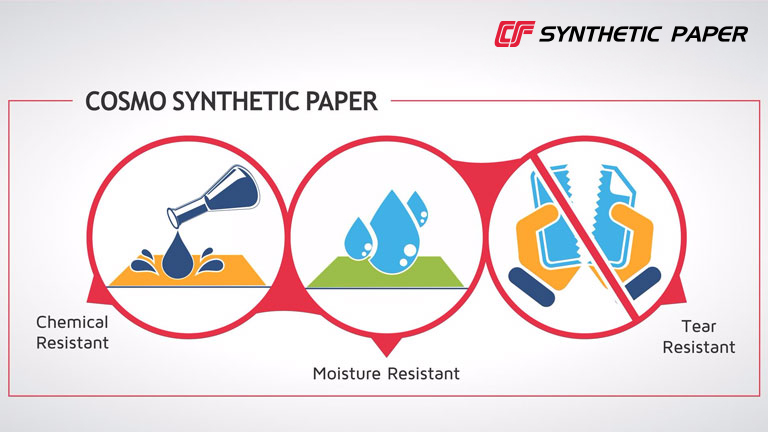
Synthetic paper is:
·
Waterproof
·
Tear-resistant
·
Chemical-resistant
·
Grease-resistant
·
UV-resistant
How Synthetic Paper Helps Avoid Reprinting Costs
1. It Refuses to Tear - Synthetic paper bends, flexes,
and keeps going.
This matters for applications like:
·
Instruction manuals
·
ID cards
·
Tags and tickets
·
Training materials
Impact: Fewer damaged copies, fewer replacements.
2. Water Is No Longer a Threat - Rain, humidity,
condensation, spilled drinks, wet hands - Synthetic paper does not absorb
moisture at all while maintaining an attractive finish.
That is why it is widely used for applications like:
·
Restaurant menus
·
Poolside signage
·
Outdoor maps
·
Marine and field guides
Impact: One print replaces months of reprints.
3. Grease and Chemicals Bounce Off - In kitchens,
factories, labs, and hospitals, materials are constantly exposed to substances
that they cannot survive. Synthetic paper resists oils, cleaning agents, and
many chemicals.
Impact: Information stays readable instead of smeared
or destroyed.
4. Prints Last Longer - Faded menus and worn-out signs
do not just look bad; they force reprints. Synthetic paper holds ink and toner
extremely well, keeping colors vibrant and text sharp even after heavy use.
Impact: Materials are replaced because content changes,
not because they look worn.
5. One Synthetic Print Replaces Many Paper Prints - A synthetic
paper application can last six months or more.
That means:
·
Fewer print jobs
·
Less staff time
·
Lower ink usage
·
Fewer interruptions
Impact: Lower total cost over time, even if each sheet
costs more.
6. The Environmental Bonus
Less reprinting also means:
·
Less waste
·
Less ink consumption
·
Fewer deliveries
·
Lower energy use
Many synthetic papers are recyclable, and using fewer
total prints can reduce overall environmental impact compared to constantly
reprinting traditional paper.
If your business keeps reprinting the same materials, it may
be time for a better solution. Start by using synthetic paper. According to our
case studies, many businesses have quickly seen fewer replacements, lower
printing costs, and smoother daily operations.
Reach out to us to know about Cosmo
Synthetic Paper grades.