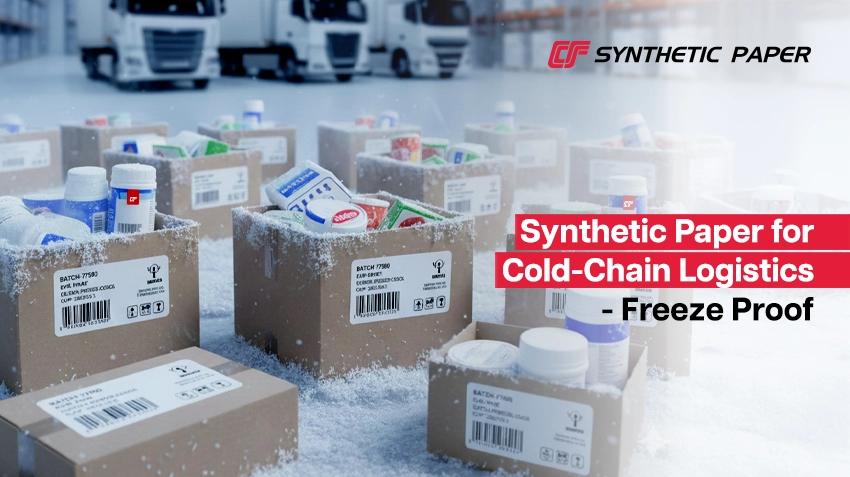
Is synthetic paper reliable for cold-chain logistics
where moisture, freezing, and temperature cycling are constant challenges?
Yes, synthetic paper is highly suitable for cold-chain
logistics because it resists moisture, does not crack or warp under freezing
conditions, and remains stable. It is freeze-proof and outperforms traditional
materials in cold and wet environments.
Let’s see how:
·
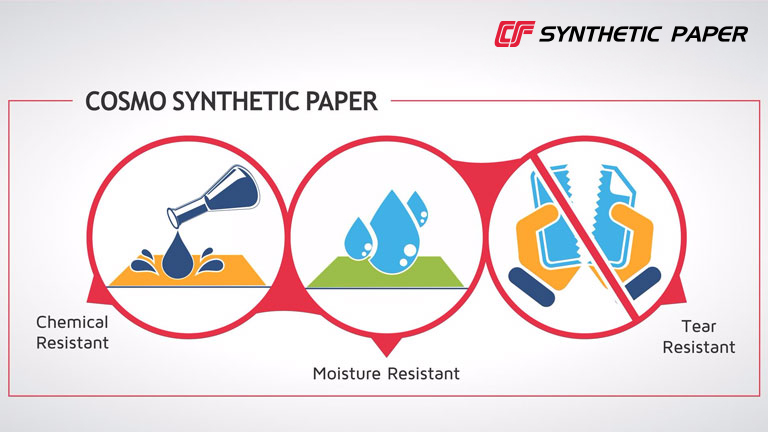
Synthetic paper is waterproof and does
not absorb moisture
·
It remains flexible and intact at freezing
temperatures
·
Temperature cycling does not cause tearing,
curling, or ink failure
·
Labels and documents stay readable from
freezer to delivery
·
Ideal for food, pharma, and medical cold-chain
use
Cold-chain logistics involves storing and transporting
products at controlled low temperatures. These conditions are common for:
·
Frozen and chilled foods
·
Vaccines and pharmaceuticals
·
Biologics and medical samples
·
Specialty chemicals
During transit, materials often move between freezers,
refrigerated trucks, cold rooms, and ambient environments. This creates
constant temperature cycling, usually combined with high humidity or direct
moisture exposure.
Traditional paper struggles in these conditions. It absorbs
moisture easily. In cold- chain environments, this leads to several problems:
·
Water absorption
·
Softening and tearing
·
Ink bleeding or fading
·
Curling and warping
·
Cracking
Once damaged, labels and documents become unreadable, causing
tracking errors, compliance issues, or rejected shipments.
Here are the properties that make our synthetic paper ideal for harsh logistics environments.
Moisture is one of the main threats in cold-chain logistics.
Condensation forms when products move between cold and warm zones. Ice crystals
and melting frost are also common.
Synthetic paper solves this problem because it:
·
Does not absorb water
·
Does not swell or soften
·
Keeps ink locked on the surface
·
Remains readable even when wet
Applications made from synthetic paper stay intact even when
exposed to ice, steam, or dripping water.
Synthetic paper is flexible in freezing conditions. PP
synthetic paper is engineered to stay pliable and strong even in deep-freezing
environments. This means:
·
No cracking or snapping
·
No surface flaking
·
No loss of print quality
Temperature cycling can damage packaging materials. Moving
repeatedly from the freezer to room temperature causes expansion and
contraction. Synthetic paper handles this well as:
·
It is moisture-resistant
·
It maintains shape and size
·
It does not curl or ripple
·
It stays flat on containers and packaging
Synthetic paper supports many printing methods,
including:
·
Thermal transfer
·
Laser printing
·
UV and flexographic printing
In cold-chain use, printed information must remain clear. PP
synthetic paper helps by:
·
Preventing ink bleed from moisture
·
Reducing smudging during handling
·
Protecting barcodes from distortion
Common Cold-Chain Applications
Tear-resistant synthetic paper is widely used in:
·
Freezer-grade shipping labels
·
Food packaging inserts
·
Pharmaceutical documentation
·
Laboratory sample tags
·
Instruction sheets inside the cold storage
Synthetic paper’s durability reduces relabeling, product loss,
and manual errors.
Conclusion
Cold-chain logistics demands application materials that can
survive moisture, freezing, and constant temperature changes. Our synthetic paper
is freeze-proof, moisture-resistant, and stable through temperature cycling, protecting
the critical information when conditions are at their worst. For operations
where readability, reliability, and durability matter, synthetic paper is a
smart and proven choice.
Reach out to us for synthetic paper types, samples, or
to consult an expert to match the right grade to your logistics needs.